Tuesday, February 03, 2009

Work on a day off


So, as I posted last time around I now have Mondays off of the day job. I spent most of the day trying to ignore the Internet while working in Photoshop. Mostly, I scanned old drawings and worked on a couple of them, trying to improve my coloring techniques which I've never been happy with. I also worked on a logo for a friend I can't show yet and most of the drawings I worked on ended up being for the Secret Room blog (*must be 18 to enter) where I post my more adult-oriented glamour girl art and dirty drawings.


All in all my first Monday off was a good day. I tried to divide my time equally between various projects, including getting some housework done (so the wife doesn't pressure me to find a part time job- the hard part will be making sure I work enough hours the other days to keep my paychecks roughly equal to what they are now) while also working on enough art projects that I feel I actually accomplished something. I've got to make sure I actually accomplish stuff at home on my day off and don't get sucked into some on-line game or Twitter or something equally useless and time-wasting.

Then again, I can't put too much pressure on myself and expect to get 100 pages of comics drawn or something equally ridiculous. I did want to spend more time actually drawing than I ended up. I have a bad habit of playing around with too many layers and layer options and textures and backgrounds, etc. once I get a drawing into Photoshop. I end up over-working stuff that was essentially a sketch or character study.

So, my plan is to spend the first couple weeks acclimating to my new schedule, blogging a bit more and trying to come up with a plan. I have so many projects in my head that I can't possibly get to them all. The hard part will be sorting them out, figuring out which are ready to go and which need more time and planning. I plan to pick a couple projects each week to push forward and keep rotating until I have an idea where everything stands and which seem the most possible, promising, and fruitful. In the meantime, enjoy a selection of old sketchbook stuff worked to death in Photoshop trying to add color so it doesn't look so bland on the web...

Saturday, January 31, 2009

Being downsized has its merits

So, thanks to the horrible economy and the fact that I work in the newspaper publishing business I now find myself with a new work schedule which means I am down to a 3 1/2 day work week and might lose some money from my weekly paycheck at a time when my family can hardly pay its bills.... and I'm happy about that! I now have a 3-day weekend including a Monday where my wife will be working and my son will either be at school or daycare (where my wife works). I will have to work 11-12 hours days to make up the lost time taking Monday off so that will be a grind but I'm looking forward to it in a weird way. For the last year all my comics projects have ground to a halt because of work and life. I have a tough time coming up with ideas or sitting down drawing when also trying to listen to my son tell me about his battles in Star Wars Battlefront or my wife is talking to me about which kids in daycare wouldn't take their nap. So, I will enjoy the extra day off and the time to hopefully get off my dead arse and start producing some art!


Anyone who looks at my recent flurry of posting and compares it the archives will notice I've been trying to post more here lately, this was an effort to hit the ground running with my new schedule. I've also been posting a lot at my art blog for dirty pictures. Hopefully as I enjoy my increased time off and get more drawing done I can break out the scanner and post some more art here which is something I haven't done enough of in the past.

The piece I posted was from last year's sketchbook which I scanned and played around with in Photoshop. More to come!

Tuesday, January 20, 2009

The benefits of a monopoly: Free shipping!

Once again I was thinking about the news that Diamond is raising their minimum sales order threshold to $2500. I'll state right now that I've never solicited a comic through Diamond, although I've looked at their web site information in the past and read everything I can about the solicitation of a comic and the act of being a "vendor" to Diamond (that's how they refer to comics publishers and artists). I started to do some more research and found this page (that's a Firefox transcript of a PDF- if that link doesn't work then here is one to the PDF) which reaffirmed my understanding that a vendor is responsible for freight costs to Diamond. By the way, that site is a great step by step numbers guide for a person looking to publish comics.

Now, I'm also fairly certain that retailers are responsible for freight from Diamond to their stores. A little research backs up that suspicion. Wouldn't you like to be the middle man dealing in a product that didn't cost you money to get to you or out to the stores? All you have to do in that situation is provide shelf space for the short time product sits in your warehouse awaiting delivery to stores. Obviously, there are other costs but the physical transport of the product is usually a prohibitive cost in doing business. Diamond outsources shipping in both directions.

According to this article by Chuck Rozanski at Mile High Comics, one of the ways Steve Geppi took control over direct market comics distribution was that he bought his own trucking company and the savings in freight costs helped gain him a competitive advantage. I can't find much else on that with my feeble attempts at using the Google. Though I did find this interesting Business Week profile from 1997 that also includes a gem about Geppi being "an unpaid adviser to Marvel since investor Carl C. Icahn took control in June." The article glances over some of Geppi's history as a comic book baron...

Geppi constructed an elaborate--and flexible--system of air and truck shippers to whisk books to retail racks nationwide. If one carrier ran into trouble, another leaped in to haul the colorful cargo. Timely delivery was a big hit with avid readers, who wait eagerly for their comics to arrive at the store every Wednesday. Publishers liked it, too. Says Paul Levitz, executive vice-president at No.2 DC Comics Inc., home of Superman and Batman: "He does an incredible job moving the product."

Diamond's advance hasn't been trouble-free. Some store owners complain that his near-monopoly has let him hike prices. And in the early '90s, publishers pumped out too many titles, leading to a glut that damaged the entire industry, particularly Marvel. Geppi got hurt when Marvel, looking to save money, decided in 1993 to distribute its own books. Overnight, Geppi lost 30% of his business. He scrambled to make up the loss via DC. By dangling attractive discounts, he expanded from handling half of its deliveries to all of them. Geppi also branched into comics-related trading cards, video games, and collectibles.
Wow. So in one article we find that Geppi gives advice to Marvel while running a business in which he cut an exclusive deal with it's main competitor? Sometimes you just have to shake your head when reading about the comics industry.

But back to the point, if Diamond's shipping costs are completely outsourced to the vendors and the vendors to which Diamond vends then Diamond hasn't been hurting through recent fuel increases. So, what could possibly be Diamond's motive for squeezing the industry for few more pieces of gold? More from that Business Week article...

Now, as an adviser to Marvel, Geppi is pushing the company to bring out new characters and freshen its mix. Marvel had pared its 200-title list to 45. Geppi feels that's going too far. And he thinks Marvel should use its clout to get special rates from printing companies for new titles, which tend to lose money. Although it's too early to tell what the impact of his counsel will be, there's little doubt that Marvel values his expertise. Geppi's free advice is hardly selfless: A robust Marvel will boost his business.
Read that last sentence again and maybe a couple more times.

Saturday, January 17, 2009

Diamond gives New Year's lump of coal

According to Comics Reporter Tom Spurgeon, comics direct market distributor/monopoly Diamond has announced that they will end the practice of publishing their Adult Previews catalog. On the surface this seems like no big deal and just a reaction to the current economic situation. But dig a little into and it's another sign Diamond is using its marketplace position to do what it wants, when it wants without concern for anything except its own ability to milk the comic book direct market for every penny. I guess Steve Geppi's love of those old Donald Duck comics taught a couple of things courtesy of Uncle Scrooge.


I'm sure the market for adult comics in North America have tanked over the years. Once upon a time it was the naughty funny books that saved Fantagraphics from extinction and allowed some creators a way to hone their skills and make a few bucks. Since the explosion of the internet comic books as stroke material seems silly now but once upon a time it wasn't as easy as entering some key words in Google. Except for erotic manga, I think the proper term is "ero," I think the market for these books was small though obviously it was strong enough to keep Diamond printing the extra supplement until now.


Strangely, the only extra supplements of the monthly Previews catalog that Diamond publishers were the adult stuff and the stuff from Marvel which was the end of the Distributor Wars that kicked off when Marvel went exclusive with Heroes World and set off a series of dominoes that resulted in Diamond acquiring exclusive rights to everything by DC, Dark Horse, Image and anyone else of any sufficient size who saw the writing on the wall. Diamond made them sign exclusive deals with promised they'd be featured in the front of the catalog- a practice today that continues to inhibit the creative destruction and entrepenuerial spirit which have always made comics one of the most vibrant art forms. The adult catalog was the only place where smaller publishers were able to gain an equal footing with more established companies and exclusivity wasn't a big deal since none of the exclusive publishers were pron publishers.

The problem here is that Diamond is the exclusive distributor of most comics to the direct market and forces you to pay upwards of $5 every single month to see what comics you might like to buy in 3 months. Due to the fallout of the Distributor Wars which resulted in many shops going under and others being pushed to the brink, most comics shops no longer take chances of products that might not sell and are non-returnable, forcing customers with odd tastes to order their product sight unseen. The Previews catalog has been a way to find out what's coming for those customers who like product that's not a top seller.

It's been my contention for a long time that Diamond needed not less catalog, but more! Many comic shops owners don't bother to look at anything but the Marvel catalog of the exclusive publisher front half of the monthly catalog. Those that do wade into the rest of the catalog find hundreds of pages, mostly made up of collectible kitsch and licensed garbage with a few small indie publishers buried somewhere in the mess. For years, I've begged that Diamond either put the toys & collectibles or the indie publishers or both into their own catalog. Many argued it would cost them money but given that they charge money for their own catalog or they could simply choose to post it on-line I find that argument without merit.

In fact, the biggest problem here is the fact that Diamond posts a copy of their catalog order form on-line and the text-only listing of its contents without any solicitation information! Yes, its another example of how they use their monopoly to squeeze money from the industry without care or concern of the long-term health of the market. Diamond could easily post a PDF of the monthly catalog on-line or add the solicitation info to it's website but it chooses not to so it can charge you money to find out information which might help you make a decision to buy more of its product. This is a tell-take sign of an abusive monopoly.

Steve Geppi is the robber baron of comics and ending the practice of publishing the adult catalog is simply another example of this which will be ignored by most of the comics press which has long ago turned a blind eye to Diamond's abuses. Most "serious and unbiased" comics commentators will buy the excuse this is economic-based, which it may partly be. The "mainstream" comics press doesn't care because they get the comics they want without problem (and because they're scared to lose access to the big 2 publishers) and the snobby art comix crowd buys all their comics at the big city comics festivals or at the few decent comics shops and doesn't care about the 90% of the country that doesn't live near the coasts or in Chicago or a handful of cities with premium comic shops.

In other words, ho hum... just another example of why comics suck and nobody cares because it probably doesn't affect their ability to buy Secret Invasion or Kramer's Ergot.

Saturday, November 08, 2008

What I hate about comics

I usually try to follow comics industry news but lately I've checked out. First, it's football season and then in case you didn't hear we had a little election. So, I've spent a lot of time reading about the NFL and the GOP. For a while I was hitting the comics shop on a regular basis but quit when I realized I wasn't buying anything I really wanted.

But really what's got me down reading about comics is that lately there's some things making me sort of angry about comics. Let me vent....

I hate the fact that some big link blogs seem to always pick up on every doodle from certain artists while completely ignoring others. I saw a link today on a well-trafficked site which featured an artists new avatar which was simply a photo turned into a vector drawing (not even by the artist!) which can now be done with one click in Illustrator.

I hate that all it takes to be a "comics industry advocate" is be a female comics reader with a LiveJournal account and sexual trauma they're willing to share in public. It's a little too easy to beat up on comics for being sexist but most of the outrages offered aren't even that outrageous compared to those in the real world and so it's hard for me to take them seriously. When given a chance to be outraged between a rape of a very minor comics character or that real rape victims are charged for the evidence collection kits police use to find their attacker, I think one just seems silly. Especially when much more popular forms of entertainment are even worse in their sexism. I see it as a cheap way to fame and way to insulate one's views from criticism.

I hate the endless cliques that seem to form where it seems that anything that falls outside of a very narrow parameter is seen as being without merit. I like a lot of different styles, genres, artists and I generally just look for what's good without paying attention to whether it's cool enough for the art comix snobs or if it has enough Star Wars reference for the super spandex fan boys.

I hate that there are more great comics now than ever but you can't find them anywhere outside of a few metro area without ordering on-line. I live within an hour of at least 6 comic shops and most don't carry more than 1 or 2 titles each from Fantagraphics, Drawn and Quarterly or Top Shelf and never carry stuff from Alternative, Buenaventura or other boutique publishers. Yet they seem willing to buy numbers of unsold comics from the Big 2.

I hate that some news sites seem to think it's new when an artist is having a fund drive in order to buy a new XBox or pay for their colonoscopy. I'm all in favor of charity but it doesn't seem to be applied evenly. Also, I'm practically a socialist but even I understand that private health insurance is available and if you are low income there may be programs like Medicaid that are available. Let's keep the charity for the people who need it.

I hate that many popular comics figures aren't even all that good. Mediocre work is championed because someone lives in New York and has lots of important friends they go drinking with on weekends. While there will always be the gadflies and socialites in any scene, comics seems overwhelmed by networkers who are famous (in comics, anyway) for being famous and haven't really done work of any significance. As long as you have the right friends you can get your foot in the door. This opens the door to many bad artists feeling their work would be more popular were it not for a conspiracy against them. Things would be better if comics were a meritocracy. Being a fun guy to hang with after a convention at the bar should get you friends, not a contract worth 6 figures.

I hate that monthly, serialized comics don't do a good job of giving you value for your money, a self-contained story that can be read on a one-off basis or even a recap so people who can't remember every little detail from something they read a month ago or don't buy every single issue can get up to speed. If comics people can't figure out to make a distinct unit of entertainment them maybe the monthly comic should just die already.

I hate that most comic artists can't draw ears to save their lives. Even the great manga artists seem to not understand the very simple structure of the human ear. Some things are hard to draw but ears are not. I know not everyone is aces with anatomy but most artists don't even try to draw ears correctly.

These are some of the things bugging me about comics lately. I know I can't change them and bitching about them will only get me accused of being jealous I'm not more successful than I am but I still had to do it anyway. I know my attitude is bad but sometimes somebody needs to give the comics industry a kick in the pants.

Sunday, August 24, 2008

16 years ago

"These days, it seems as though believing in even the possibility of such simple things and obvious things as basic order and unconditional justice is the product of a foolishly optimistic and laughably unrealistic mind. What the hell's happened to us, anyway?"

- Lou Stathis in Reflex magazine, 1992
Found this quote in a Vertigo comic I picked up in the dollar bin at my local shop a while back. That month's Vertigo comics had an obituary for editor Lou Stathis who died in 1997 from a brain tumor. I found it particularly relevant to things I've been thinking about recently concerning politics and science fiction. Once upon a time one could imagine the world getting better, that technology could make our lives better. Now, it seems humanity is doomed to be forever distracted by "bread and circuses" and we shall go the way of the Roman Empire, perhaps taking the planet's hospital atmosphere with us while furiously texting away on our iPhones about some viral video we just watched.

Stathis seems like one of those people I'd have loved to have met. He chose to work with many of my favorite artists and helped create some great books. Not to mention that his work in Reflex really opened my eyes to cartoonists like Kyle Baker and Dan Clowes when I was probably reading lots of X-Men.

Saturday, August 16, 2008

What's up, Manchester

For some reason this blog is getting a lot of hits from Manchester, England in the last few days with none of them coming from inbound links. So, just out of curiosity, what's up, Manchester? You can leave a comment or send mail to my profile name (Joe Willy) at Red Flag Publishing dot com.

Saturday, August 09, 2008

Web comics are the answer

In my last post, I talked about how I believed the comics industry, especially the mainstream "Big 2" publisher, should embrace the anthology as a means to deliver the monthly, serialized "floppy" comic book. Because of changing economics and industry dynamics I think the anthology is a way for the larger publishers to go back to their roots and return to the successful formula that launched their greatest creations, Superman, Batman, Spider-Man and countless others.
Now I want to talk about how I think the smaller companies and independent creators need to take a harder look at web comics as their model to replace what used to be the means for unknown or underground voices to enter the comic book industry, the black and white indy comic. Although, I would also like to see more indy anthologies (and there area and have been a a lot- Mome, 24/7, Flight, Comic Book Tattoo, Drawn & Quarterly, etc.) but the problem in today's market is that distribution has devolved into a nearly mainstream-only delivery system in the majority of most direct market comics shops. Retailers, forced to place their bets on what they will sell and not get stuck having to keep (or if they do what might have a shelf life) are betting on Coke and Pepsi's big names and not stocking very deep into the distributor catalog.
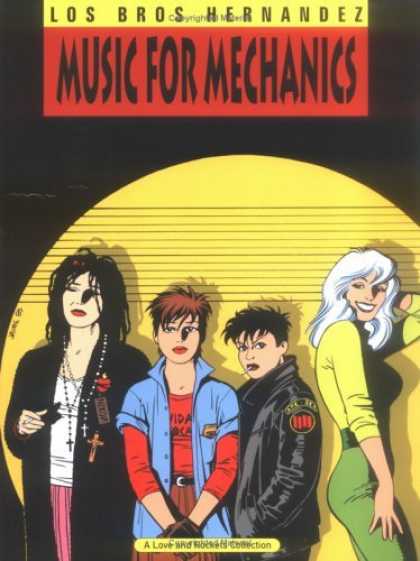
In fact, in an average 6 months I shop at at least four area comic shops. A fifth I used to go to but gave up on. In the aftermath of the 90s these shops all slowly cut back on their ordering of alternative comics, even as that part of the industry developed superstars like Los Bros. Hernandez, Adrian Tomine, Chris Ware, Chester Brown, etc. When retailers got stuck with the bill for thousands of unsold "hot" properties, they counter-intuitively dumped the stuff that appealed to aesthetic or literary interests and firmly entrenched themselves into the fanboy collector market by placing even more chips in the basket of the Big 2.
And so I have over the years found it harder and harder to find interesting alternative work. Stores that used to get an issue of The Comics Journal, Acme Novelty Library, or Optic Nerve might now just order a couple extra copies of Punisher War Journal or Catwoman. Because of the deeper discounts from the publishers who have signed exclusive deals with Diamond, retailers have gone with the products with greater profit margin and a "reliable" customer base- the every Wednesday crowd.

Now, I see where more and more indy comics creators have gone from publishing comics to making mini-comics. Higher paper costs and printing increases have helped this along. But once upon a time a tiny publisher or sole creator could expect to publish his book on a press, have Diamond carry it and see a fair amount of orders. Now these creators are forced to go to photocopier publishing or print-on-demand (POD) and hand-sell their creations, meaning if you don't live near these creators you have almost no chance of seeing their book. While some web sites have attempted mini-comic distribution on-line they were often plagued by poor site design and interface, a lack of preview art, little to no advertising, and perhaps in the early days a reluctance for consumers to engage in e-commerce (print fetishism may be an issue here- some of us still want to touch the merchandize- to "squeeze the Charmin" as it were), not to mention high shipping costs- unless you want to order a dozen mini-comics you may be paying as much for shipping as you are for the product you are ordering.

Meanwhile, we've seen a generation emerge that has been creating web comics for several years and already produced "superstars" that make a living at their work and are getting signed to book deals from major publishers. Sadly, most of the people embracing web comics seem to be humor-based strips often aimed at youth culture niches such as gamers of fantasy-based or furry-oriented. While it's nice to see these areas flourish there is a gaping hole where the traditional indy comics crowd and aspiring mainstream creators should be. While we've seen a start very recently with projects like The Chemistry Set, Transmission-X, and Act-i-vate, I still see a lot of newer creators dumping money into print without first establishing a desire for their product, something which can be created almost free by using the internet and web comics.
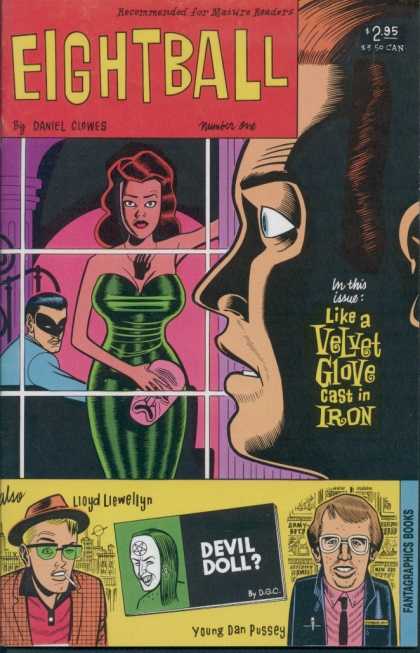
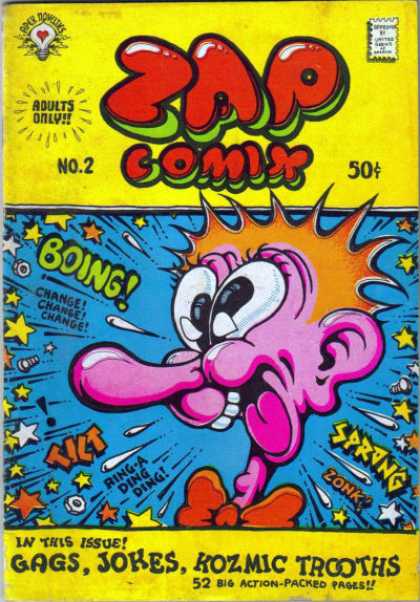
This lesson was one learned the hard way. Long gone is the time when creators could create the Teenage Mutant Ninja Turtles phenomenon with a self-published black and white comic or the days where an R. Crumb could sell-sell his way from Zap #1 to a chateau in France. In fact, I'm not even sure it's still possible for a Dan Clowes to come up the way he did, starting with Llyod Llewelyn and then moving to Eightball, selling enough copies to at least keep going and progressing. I also think the fact that a lot of record stores used to carry indy comics was a boon to the industry, not only providing an alternate sales outlet by by having music fans get turned on to interesting artists that could provide cover art, helping further expand the reach of the artists and also help provide a more stable outcome. Alternative newspapers also serialized comics and bought illustration from comic artists which further made it possible to keep the young artists going and improving. A lot has changed...

Now, the best way for an artist to be seen is to put art on-line and hope it gets picked up by Boing Boing or some other outlet that bring eyeballs to a site and creates exposure for an artist. The upside is now you can be seen by millions, but the trade-off is that you are now not just competing against the artists in your city or region to get noticed but every artist in the world. While you can still make some money off print it seems harder than ye olden tyme days and I think that means artists have to be willing to make work available for free on-line- something which goes against the instincts of many people who value their creations and believe them to be of some worth. We live in a culture where people are supposed to be paid for their work, in fact that's sort of how capitalism works, yet we find ourselves in a time where there's billions of web sites with countless hours of free content available. Every artist has to compete against YouTube, MySpace, iTunes, and more.

It almost seems like some of us are doomed to have missed the boat of the black and white boom of the '80s or even the alternative comics explosion of the 90s, yet maybe aren't young enough or tech-saavy enough to take advantage of the changes of the Aughts. I can see a whole generation of younger people almost intuitively understanding the world they live in, while this thirty-something is caught between the rock of a withering print industry and the hard place of a constantly-evolving world of tech which seems to move every time I think I've grabbed it. But I still see others who haven't seem to have caught on. It amazes me how many comic book message boards I go to where some unknown author is looking for an artist for their 12-part mini-series to be printed ye olde fashioned way.

Print is still viable if you an art comix creator who wants to silk screen covers and hand sell at conventions which is great if you live on the East or West Coast and your goal to is to get printed in Kramer's Ergot. Print is still viable if you're looking to break in at Marvel or DC. But if you're one of those other people who wants to work in the middle- in that grey area between precious (sometimes pretentious) art comix and the commerical (sometimes exploitative) superhero industry, I think you're only chance of making a go of it is to put your comics on the web and try to build an audience to eventually sell books, prints and other merchandise to in order to be repaid for your work. The audience for that work is poorly served by the current state of the industry. Not that I think web comics are the perfect solution, but they are the best one we have right now.

One last note about the fact that web comics aren't the perfect solution, but the best one we have right now: A big problem I see is that the audience still wants to read stuff in print, except for the people who are actually fans of web comics- usually people following humor based comic strips since a four panel strip isn't hard on the eyes the way a 300-page graphic novel would be. Current fans of web comics expect one thing while fans of print expect another. We need more web comics portals that cater to fans of print-based comics looking to find what's new and interesting, to help those creators build an audience for their off-line work and we also need to educate the audience that the distribution and retailing arms of the industry are acting as a blockage that is preventing the next Eightball, Love and Rockets or Cerebus from being a success. At a time when comics are dominating Hollywood and boosting bookstore profit margins, it seems even harder than ever to find good comics in your comic book store.

Monday, August 04, 2008

Anthologies are the answer!

I was thinking this past weekend about writing a post about some issues regarding the comics industry and then along comes Tom Spurgeon with some well-timed nuggets of wisdom that really kicked my thoughts into overdrive. While Spurgeon occasionally seems a little vague or obtuse in making his points or in his use of historical analogies (although, the fault probably lies more in my ability to understand than in his writing), I find a lot there to digest.

For one, the hard number that it takes 3500 copies to break even on a black and white comic or 4600 for a color comic is nice information to have out there in an industry where hard numbers are hard to come by and sometimes even avoided. Some comics pros even take to message board bemoaning the fact that some pesky journalists demand to see sales numbers. Thanks to Spurge for plucking that one out.

The idea of a sales threshhold “magic” number also leads one to question the “profitability” of comics that fall under that sales threshold. I guess cover price has a lot to do with it since most comics come in at $2.99 and a book priced a buck more might be able to sell less copies but make more than that minimum needed to continue publishing. The price of “talent” and overhead likely is a factor- comics that pay an inker, a letterer and a colorist (or person to do graytone- colorist doesn’t seem a good term to begin with but especially when a book lacks “color”) are probably much harder to be considered a profitable or even break even venture with so many mouths to feed from one product. An indy book created by one person for a small company could maybe continue on under the 3500 level where a book with a large creative team from a mid-level indy company might not (or, conversely, maybe the mid-level company has a lower overhead cost per-book than someone doing it on their own as a sel-publisher- an interesting thing for further future investigation). Much like a touring band (where a power trio may be able to make enough to keep going where than 9-piece orchestra has a much tougher time), a book with less people to pay can be profitable at a smaller level.

This is one reason why Vertigo takes so much heat when the monthly sales charts are discussed at Heidi MacDonald’s The Beat is that people understand that a large company like Time Warner (DC) means more overhead and higher costs, thus more copies need to be sold to keep a book going. Although a large company can also afford to swallow early losses if they think a book will pay for itself later (either in trade paperback form or through other media such as film deals and licensing). A Big 2 title selling near that 4600 mark has to be in danger of cancellation and Spurgeon makes great points that companies seem to be doing a piss poor job of finding a larger audience to sell those books to.

This gets in to the next phase of this rant and that is the catch-22 in comics where the existing audience and market often do not support new and interesting books that could represent the growth of the medium and the industry but the mythical “potential” audience isn’t interested in walking into a direct market store outside, perhaps, of a few select outlets scattered in major cities, most along the coasts.

Every comics reader with a blog seems to realize what has been labeled the “death of the floppy” but few seem to understand the larger implications of it and companies seem so beholden to the cash flow of their weekly output into the direct market that they appear unable to break free. Lots of fans have offered advice but are shot down with the usual line that they don’t know what they’re talking about and don’t understand the big picture, and if only they knew the inside super secret password then they'd see that all is fine and even if it wasn't there's nothing anyone can do about it anyway. But it’s pretty obvious to most anyone with half a brain that the big picture is the entire media landscape is shifting and things don’t look much like they did 10 years ago and in another 10 years may be even more unrecognizable. It’s apparent that the landscape has shifted and all media companies are having to evolve or die. We may be a long way off from the deaths but it’s never too soon to start the evolution.


One part of that evolution is for everyone to realize that the current method of serializing comics in monthly pamphlets is becoming more economically unsustainable. Higher paper costs, higher gas prices leading to greater shipping costs and other factors are driving up the costs of what was once a disposal “sampler” package. In the early days of comic books, the basic format was a higher page count with a variety of many stories in different genres- in other words, the Golden Age blossomed under a rather similar model (with many less pages, obviously) now employed by Shonen Jump and Shojo Beat- more bang for your buck and giving new series a chance to find an audience. With production and distribution virtually free on-line more and more people are understanding that a model that includes the web in the “first run” makes more sense* (something I will hopefully tackle in my next attack on this subject matter).

Currently the US comics market makes it’s money on monthly pamphlets that later get collected in trade paperback. The problem is that the model is redundant. It might make sense if the cheap sampler package was affordable, on cheap paper and could be easily recycled or thrown away, but due to the collector’s market that boomed in the 90s (and led to a bust, I might add) we now have what was once a trash, disposable medium printed on archival paper with prices that effectively shut most people from buying as many books as they’d like or a newcomer from sampling that first taste that might get them hooked, especially children.

The answer, it seems obvious to me, is for comics companies to go back to the model that worked in the past when paper prices were high- more pages and more stories, and definitely more genres. We see this starting to take place, and I don’t expect like some commentators do, that this change can happen overnight or that companies will ditch one reliable revenue stream
(even if it is a dwindling one) to try a whole new one. But I do notice that more and more I notice Marvel repackaging recent material into different format, this is especially true with it’s kid-friendly Marvel Adventures line where stories that originally ran in the monthly comic get reprinted along with others (including some classic early stuff from the 1960s) and puzzles, games, pin-ups, etc. in a larger magazine format (which I think are even sold at newsstand outlets or big box stores). Marvel seems willing to at least test the waters.

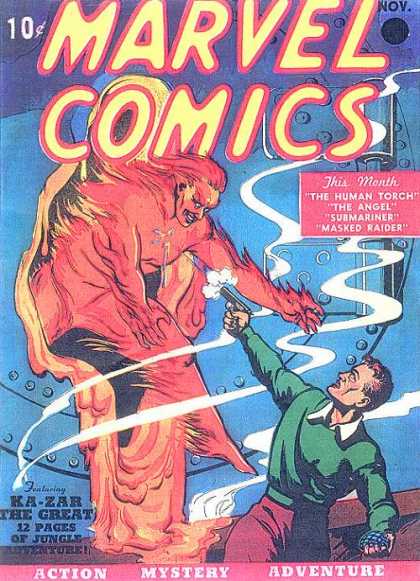
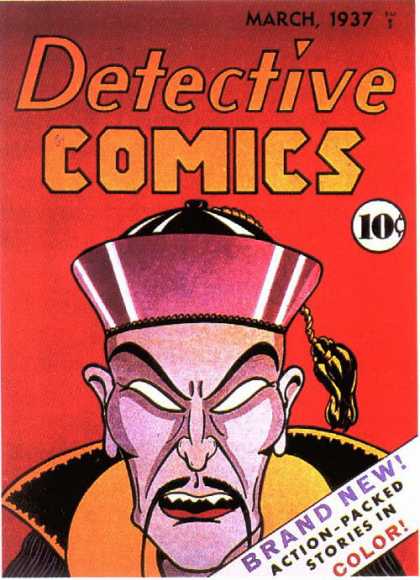
Now, my dream is to the Big 2 US comics companies try to publish one monthly anthology, perhaps at the end of the month, collecting all their “family” titles into one themed anthology book. Imagine all the Bat-Man titles in one “Detective Comics” anthology bringing that book full circle? Imagine one complete Avengers anthology or X-Men. Imagine an all-Vertigo anthology? Marvel is already doing as much with it’s thrice-monthly Amazing Spider-Man though still publishing three separate books- how about on the fourth week they publish one fat with those three issues in one comic for those who can wait and want it all in one chunk? Why not try it?

Does anyone in comics realize Heavy Metal has been around for as long as it has operating on a similar model? No one in comics seems to notice Mad Magazine or Nickelodeon as potential models either.

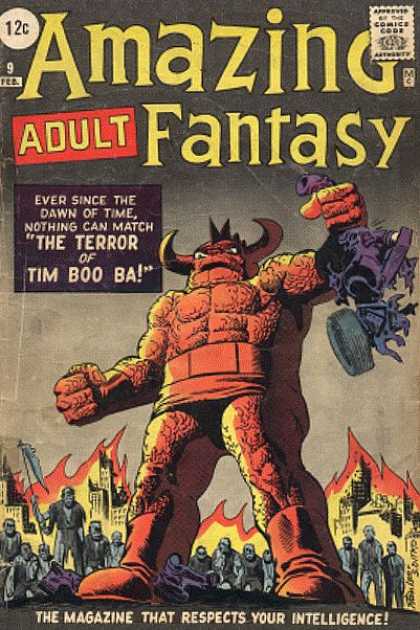
What I like about the idea is that, as I said, it brings comics full circle. One reason, besides lowering overhead, that comics flourished in the days when they were published in thicker anthology style comics is that anthologies allow for experimentation. If DC had only featured one hero in Detective would they have given Batman a chance? If Marvel didn’t have an anthology of “Adult Fantasy” would Spider-Man have gained enough audience to sustain a monthly series? Without those anthologies would names like Siegel and Shuster or Kirby or Ditko be as well known? Would those creations even exist?

Anthologies allow unknown creators to get a few pages in front of an audience to develop, grow and even experiment. Anthologies allow new ideas to be tested in the same ways big companies use test markets to try new products. Marvel threw a lot of stuff at the wall in those early days and a lot of things didn't stick, but enough did that a tiny company with a handful of employees became a dominant force in the comics industry and now in Hollywood... all because of anthologies.

Sunday, August 03, 2008

The Spectre

I was messing around with an old sketch of The Spectre I did a couple years ago. I had picked up issue #1 of the new DC series in the dollar bin at my local comic shop and had drawn a really fast head sketch. I'd scanned it in and never did anything with it until the other day when I was surfing through my hard drive and ran across it. I spent a little time in Photoshop, extending the body and adding some cool effects and it ending up looking kind of nice- too nice considering that the initial sketch had some real weaknesses. So, I decided to start over from a new (and hopefully better) drawing. It came out looking quite a bit different than what I'd planned as I tend to follow the "happy accident" theory of picture-making where I sort of experiment and mess around and see where the picture leads me instead of following a pre-planned formula.

This is a character I always liked even though I never really read anything with him in it. I missed the 70s supernatural superhero wave by a few years but I always saw the back issues in the comic shops and have been drawn to those characters. The Spectre is a dead cop superhero and so he provides a nice mix of three genres- crime, horror and superhero- all in one character.